
Every month you spend charging below your market rate, you're paying what we call the Silence Tax — the invisible cost of not knowing what you're worth. It compounds quietly. A creator undercharging by ₹8,000 per collaboration, closing four brand deals a month, hands ₹32,000 back to the market every single month. That's ₹3.84 lakh a year. Silently. Without a single person telling them it's happening.
India's influencer marketing industry will cross ₹5,500 crore in 2026. Brands have budgets. Agencies have spreadsheets. The only person in the negotiation room without a verified number is almost always the creator. This blog fixes that — with a rate calculator built from real India market data, a full rate card by tier, and the frameworks you need to stop guessing and start quoting with confidence.
Use the calculator first. Then read through — because knowing your number is only half the equation. The other half is understanding why that number is right, so you can defend it when a brand tries to talk you down.
The 6x Paradox: Why Nano and Micro Creators Are Worth More Than Their Rates Suggest
A nano-influencer with 8,000 followers in Pune gets 9% engagement on a reel. A mega-influencer with 2 million followers gets 0.7%. That's a 12x difference in engagement rate. But the brand brief typically pays 200x less to the nano creator. The math doesn't hold up — and this structural mispricing is exactly what every D2C brand running performance-first campaigns in India has quietly figured out and is quietly exploiting.
Engagement rate falls at a near-logarithmic curve as follower count rises. This isn't noise — it's structural. Smaller audiences know the creator personally, or feel like they do. They comment with real opinions. They save posts. They click links. They buy. A brand spending ₹50,000 on a micro-influencer campaign is often reaching more genuinely interested people than one spending ₹5 lakh on a macro-influencer campaign. The brands that crack India first are the ones who ran this math before their competitors did.
“Reach is rented attention. Engagement is earned trust. These are not the same currency, and your rate card should reflect the exchange rate between them.”
The 6x Paradox principleA creator's perspective on brand deal rates in India.
The Complete 2026 Rate Card: Every Tier, Every Content Type on Instagram
The table below is sourced from actual brand briefs, creator invoices, and agency rate sheets reviewed across India's D2C ecosystem in 2026. These are Instagram baseline rates for a single deliverable — lifestyle niche, metro city. Use the niche and platform multipliers in the sections below to adjust your number from here.
The most important column is not the market rate. It's the floor. That's the line you don't cross — the number below which the deal costs more in time, creative effort, and revision cycles than it returns in cash. A brand offering you below your floor isn't a low offer. It's a signal about how they value creators. Walk away.
| Tier | Followers | Reel | Post / Carousel | Story |
|---|---|---|---|---|
| Nano | 1K–10K | ₹3K–₹15K | ₹2.5K–₹10K | ₹1.5K–₹6K |
| Micro | 10K–50K | ₹15K–₹45K | ₹10K–₹30K | ₹5K–₹15K |
| Mid-Micro | 50K–100K | ₹45K–₹85K | ₹30K–₹60K | ₹15K–₹30K |
| Mid-Tier | 100K–500K | ₹85K–₹2.5L | ₹60K–₹1.5L | ₹30K–₹75K |
| Macro | 500K–1M | ₹2.5L–₹8.5L | ₹1.5L–₹5L | ₹75K–₹2.5L |
| Mega | 1M+ | ₹8.5L–₹20L | ₹5L–₹12L | ₹2.5L–₹6L |
Instagram · Single deliverable · Lifestyle niche · Metro · 2026 India market baseline
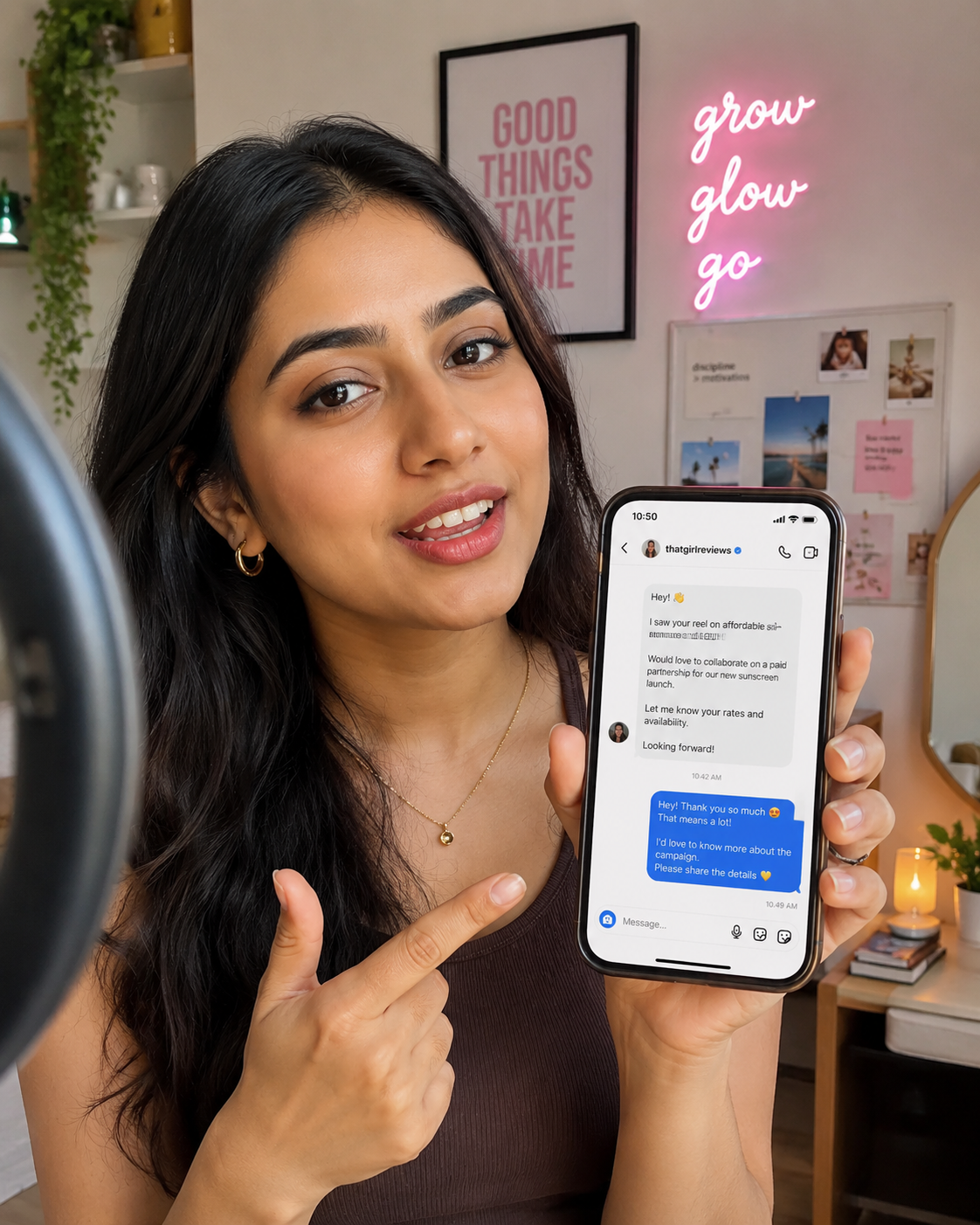
A real brand collab DM. Their opening offer should meet your floor — not define it.
The Niche Multiplier: Why a Finance Creator Earns 1.3x More Than a Lifestyle Creator at the Same Follower Count
Not all followers are equal. A finance creator's audience is in active spend mode — they're researching investment tools, comparing fintech apps, looking for the next productivity subscription to try. A lifestyle creator's audience is in inspiration mode — they might buy eventually, but they're not here to shop right now. This difference in what we call the Commercial Intent Score (CIS) is why brands structurally pay more for audiences that convert faster, regardless of the follower count behind them.
Understanding your niche's CIS changes both how you price and who you pitch. A food creator charging the same rate as a finance creator at identical follower counts is leaving money on the table if they're in finance — and getting ghosted on proposals if they're in food and pricing like finance. The multipliers below come directly from what D2C brands in India actually budget per niche, not from what creators report charging.
“Your niche determines the purchasing temperature of your audience. That temperature is what brands are actually buying — your follower count is just the packaging.”
The Commercial Intent Score principlePlatform Rates: Instagram Is Baseline. YouTube Pays 2.5x. LinkedIn Is the Most Underpriced Bet in India Right Now.
Creators who price for Instagram and then apply the same number to every other platform are systematically undercharging for the platforms that deserve more. A YouTube long-form video integration takes 10–30 hours of production work. It ranks in search results. It compounds views over years. A brand integration embedded in a YouTube video uploaded today will still drive watch time — and brand impressions — in 2028. The price of that asset should reflect its shelf life, not just its publish date.
LinkedIn is the one the market hasn't priced yet. India's LinkedIn creator economy is growing faster than the rate cards have caught up to. A creator in the finance, tech, or startup space with 30,000 LinkedIn followers can legitimately command rates equivalent to a 100,000-follower Instagram account — because their audience is made of professionals, founders, and decision-makers with direct purchasing authority, not consumers passively scrolling a feed.
“Every platform you post on has a different rate multiplier. Charging the same for a YouTube integration and an Instagram Reel means one of them is definitively wrong.”
The platform-adjusted rate principle
A standard brand brief email. Notice they specify platform — your rate changes with it.
- Instagram Reel — 1.0× (baseline)
- Instagram Post / Carousel — 1.0×
- Instagram Story — 0.5×
- YouTube Short — 0.65×
- LinkedIn Post / Article — 1.4×
- LinkedIn Short Video — 0.9×
- 10–30 hours of production effort
- Search-indexed — views compound for years
- Brand integration visible long after publish
- Segment or full-video sponsorship options
- Lifespan: 3–5 years of active views
- Most underpriced format in India 2026
The Tier 2 Premium: Why a Creator From Jaipur Can Charge as Much as One From Mumbai With 2x the Followers
Metro creators get more brand inquiries. Tier 2 creators get better campaign results. This gap between inbound volume and actual performance is the most mispriced opportunity in Indian influencer marketing right now. Creators from Jaipur, Indore, Nagpur, Coimbatore, and similar cities consistently deliver 4.5–5.5% engagement rates versus the 3–4% metro average — because their audiences are tighter communities, less saturated with brand content, and more likely to treat a creator recommendation as a genuine personal endorsement rather than another sponsored post in a scroll.
For D2C brands trying to crack Tier 2 India — the fastest-growing consumer segment in the country — this is a structural advantage that most creators from these cities haven't yet priced into their rates. If you're a creator from a Tier 2 or Tier 3 city and you're applying a metro-minus discount to your rate card, you are actively underselling a competitive advantage. The data says you should be charging differently — not less.
“The Tier 2 discount is a myth invented by brands who haven't run their own campaign data. Run the data. Cost-per-engaged-viewer is lower, not higher, outside the metros.”
The Tier 2 Premium principle
Your rate card should look like this — specific, tiered, and sent before negotiation starts.
- Followers: 70,000
- Avg. engagement rate: ~2.5%
- Engaged viewers per Reel: ~1,750
- Rate per Reel: ₹52,000
- Cost per engaged viewer: ~₹30
- Higher quote, more brand saturation
- Followers: 35,000
- Avg. engagement rate: ~6%
- Engaged viewers per Reel: ~2,100
- Rate per Reel: ₹26,000
- Cost per engaged viewer: ~₹12
- Half the cost. 20% more engaged viewers.
The Eight Questions Every Creator and Brand Is Searching For — Answered Directly
No padding. No caveats. Just the specific answers the market keeps looking for.
How much do Indian influencers charge per post in 2026?
Nano influencers (1K–10K followers) charge ₹2,500–₹15,000 per Instagram post. Micro influencers (10K–100K) charge ₹10,000–₹85,000. Mid-tier creators (100K–500K) charge ₹60,000–₹2.5 lakh. These are lifestyle niche, metro baseline figures for a single deliverable. Add 30% for tech/finance niche, 2.5x for YouTube long-form.
What is a fair engagement rate for Indian micro influencers on Instagram?
Micro influencers in India (10K–100K followers) average 3.5–7% engagement on Instagram in 2026. Nano influencers (under 10K) average 6–12%. Anything above 4% for a micro influencer is strong and justifies the ceiling rate. Anything below 2% at the micro tier is a signal to audit for fake followers before negotiating.
How much should I charge for an Instagram Reel in India?
At 25,000 followers in the fashion niche, your market rate is approximately ₹22,000–₹40,000 per Reel in 2026. At 25,000 followers in the tech or finance niche, that rises to ₹29,000–₹52,000. Use the rate calculator at the top of this page to get your exact floor, market, and ceiling rates by follower tier, platform, niche, and city.
What is the difference between Instagram and YouTube influencer rates in India?
YouTube long-form integrations cost 2–2.5x more than equivalent Instagram Reels in India. A creator who charges ₹30,000 for an Instagram Reel should be charging ₹65,000–₹75,000 for a YouTube integration. The premium reflects production time, search longevity, and the compounding value of a YouTube asset — a 2026 video integration still drives views and brand impressions in 2028.
How much negotiation room is typical in Indian influencer rates?
Most single-post rates in India have a 15–25% negotiation buffer. For campaign packages involving 3 or more deliverables, creators regularly offer 25–35% off their per-post rate. The better ask is not "can you lower your rate" but "what does a 3-Reel + 5-Story package look like?" That framing gets better pricing and better creative commitment from the creator.
Why do finance and tech creators charge more than food or lifestyle creators?
A finance creator's audience is in active purchasing mode — researching tools, apps, and financial products. A food creator's audience is in inspiration mode. Brands pay for the probability of conversion, not just reach. Tech and finance niches carry a 1.3× Commercial Intent Score because their audiences convert at significantly higher rates per impression compared to lifestyle or food audiences at equivalent follower counts.
What is the minimum a nano influencer should accept in India in 2026?
A nano influencer (1K–10K followers) should not go below ₹2,500 for any single deliverable in 2026. That is the floor for a Story. For a Reel, the floor is ₹3,000. Anything below this means the time cost of briefing, creating, revising, and delivering the content exceeds the financial return — even before accounting for your creative brief cycles, caption approvals, and usage rights you are giving up.
How much does a brand typically budget for a micro-influencer campaign in India?
D2C brands in India typically allocate ₹50,000–₹3,00,000 per micro-influencer campaign cycle in 2026. A standard single-creator brief — 1 Reel + 3 Stories from a 30K-follower creator — runs ₹25,000–₹60,000. Brands running 5–10 creator campaigns simultaneously spend ₹1.5–₹5 lakh per cycle, making the ₹25,000–₹45,000 per creator range their most common individual budget anchor.

Aum Pagar is one of India's clearest voices on marketing strategy and the creator economy — breaking down real brand decisions, campaign structures, and creator business frameworks for Indian audiences in a way that actually translates to action. He operates precisely at the intersection this article covers: understanding market rates, knowing your own worth, and building brand partnerships that make financial sense for both sides of the brief.
“Your rate is a signal. Price too low and brands assume low quality. Price too high without the data to back it up and you lose the deal. Know your numbers first — then name your number.”
Creators like Aum who understand their own market position — and price from data rather than desperation — are the ones D2C brands on Klipstars come back to for repeat campaigns. Knowing your rate isn't just about one deal. It tells brands that you run your content like a business.
You Know Your Rate.
Now Let Brands Find You at It.
Klipstars connects D2C brands with micro and nano creators across India — transparently, with no rate-shaving middlemen taking a cut of your deal. Register free, set your rate, and let brands that have already budgeted for creators like you come to you directly.
Register as a Creator — It's Free →Are you a brand? Partner with us at hello@klipstars.com